Lessons Learned From Heaving Damage
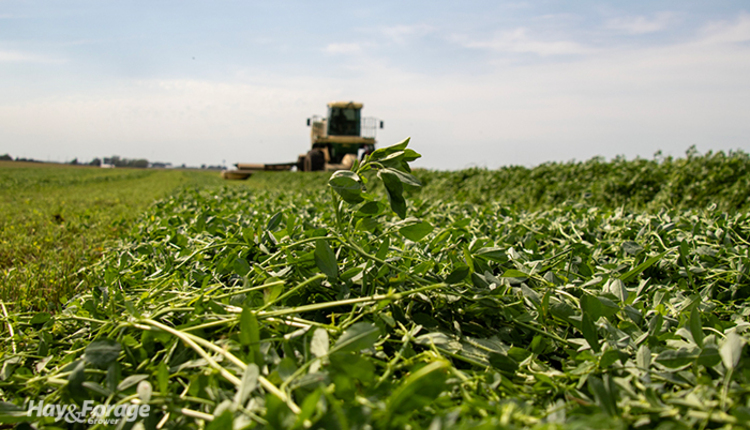
Pure alfalfa fields three years or older are at higher risk from heaving damage than younger stands. And incorporating grass in an alfalfa stand, if you’re able to, will lessen the severity of heaving.
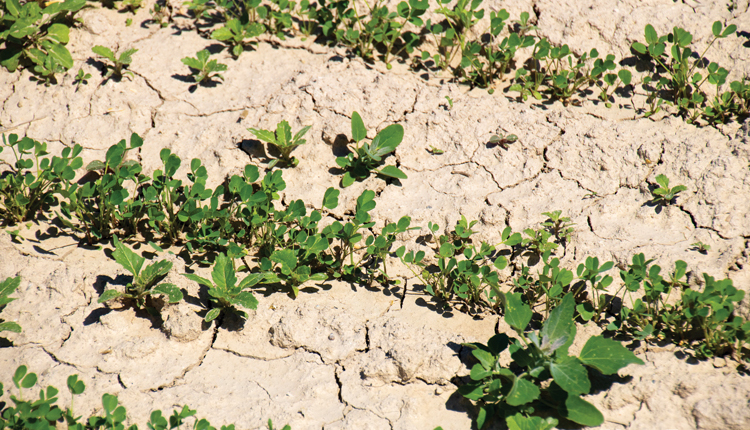
Photo shows 4” heaving in a four-year-old alfalfa stand in central Illinois, discovered last week. Photos by Kevin Black, Growmark, Inc.
So say forage specialists, one of which visited a Bloomington, IL, alfalfa field showing taproots pushed from 4-6” and up to 8-10” out of the soil in late March. Kevin Black, an agronomist for Growmark/FS, says a number of central Illinois alfalfa fields have winter damage caused by heaving, or the repeated freezing and thawing that pushes plant roots above ground. (For a Midwest report on possible heaving damage, see the March 31 issue of eHay Weekly.)
“The grower I spoke to has spoken to other growers (with alfalfa stands affected by heaving). He says there’s a consistent pattern that the stands were over three years old. In his case, it was four years old,” Black says.
That makes sense, he adds. As older stands thin, they have heavier taproots and fewer neighboring plants to help support them. “So as the soils expand and contract, they have more of a tendency to push those plants out.”
Photo shows 7” heaving in a four-year-old alfalfa stand in central Illinois, discovered last week. Photos by Kevin Black, Growmark, Inc.
Stands of alfalfa with a cool-season grass, however, might have a similar percentage of heaved alfalfa plants, but the height of the heaving may not be as pronounced as with pure stands, says Keith Johnson, Purdue University extension forage agronomist. “In my observations, where you have pure stands of alfalfa the heaving might be 3”. Where you have grasses – orchardgrass specifically, in my observations – growing with the alfalfa, heaving was 1-1½”. I would say the degree of consequences of the heaving was less with alfalfa-grass stands.
“If I was growing alfalfa in an area that was on a soil type that wasn’t the most ideal and heaving was part of the reason that stand declined,” Johnson adds, “I would include an adapted cool-season.”
Central Illinois growers who market pure alfalfas don’t have that option, Black says,. At the same time, it’s becoming more common that cash alfalfa hay growers keep stands no more than three years.
For heaving recommendations from University of Wisconsin extension forage specialist Dan Undersander, click here.
Want to use this article? Click here for options!
© 2009 Penton Media Inc.
Acceptable Use Policy blog comments powered by Disqus
Top Hay Articles
advertisement
Research in Brief
The following items report on forage-related research recently presented by University experts at meetings across the country.