Stellar Silage

6. Review silage covering

Stored corn silage exposed to water seepage can undergo a second fermentation that can diminish feed intake, lower energy content and inhibit milkfat synthesis. Be ready to cover the sidewalls and top with a 6-8 mil polyethylene plastic and split tires/gravel bags, or an oxygen barrier system such as Silostop, in a timely and efficient way.

Use enough weighting material so plastic will not billow in the wind. A bunker silo should be filled and covered in three days or less. The plastic must be tight against the silage and sealed around the bunker edges so water drains away from the silage.

7. Optimize crop processing

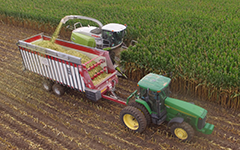
Check your first load of chopped corn silage, and again throughout harvest. Throw silage in a bucket half-full of water so corn kernel pieces sink to the bottom. Remove the floating forage on top (check fiber length), then examine corn pieces to make sure they are properly processed.

To maximize the energy content of corn silage, adjust your processor so it damages 90% of the kernels and pulverizes the cobs.

Cutting height: Determine whether higher tonnage or higher quality is more important and cut accordingly. When chopping height is raised from 6 to 18", the quantity of silage dry matter is reduced about 10%, but estimated milk per ton increases because the fibrous and less digestible lower stalk is left in the field.

Length of cut: The optimum theoretical length of cut (TLC) varies by crop maturity stage, whole-plant moisture and whether the crop is processed. In most situations, the recommended TLC is ¨ö-¨ú" with a processor; ¨ù-¨ü" without one.

8. Use an inoculant

To optimize fermentation, preserve quality and minimize losses, use a quality inoculant based on how you store and feed out your silage. A litany of products is available, so the best advice is to choose a product backed by sound research.

Homofermentative inoculants drop pH quickly to improve dry-matter recovery by 2-3% compared to heterofermentative products, and can improve animal performance by 3-5%, with a downside of possible heating during feed-out.

Heterofermentative (Lactobacillus buchneri) bacteria stop heating and spoilage for long bunk life, and improve aerobic stability at the cost of a somewhat reduced dry-matter recovery compared with a homofermentative inoculant.

9. Proper feed-out

Optimum feed-out rates happen when bunkers and piles are sized properly, so size before filling.

Maintain a good, solid and clean face without disturbing the layers behind the face; a defacer accomplishes this best. Remove 6" in winter and 12" in summer from the face every day. At the end of the day, make sure all loose silage is removed, and take any spoiled silage away from the pile.

Corn Silage Resources:

University of Wisconsin Forage Resources

Kansas State University Silage Web site

Want to use this article? Click here for options!
© 2008 Penton Media Inc.

Research in Brief

The following items report on forage-related research recently presented by University experts at meetings across the country.

Latest Jobs

Browse Back Issues

  • May 2008 Cover
  • April 2007 Cover
  • March 2008 Cover
  • February 2008 Cover
  • January 2008 Cover
  • November 2007 Cover

Resources

  • USDA Hay Prices
  • Horse Fodder
  • Product Info
  • Custom Forage Harvesting
  • Industry Links
  • National Alfalfa Symposium
AgribizJobs.com - find agriculture jobs near you!

Marketplace Ads

  • Hay for Sale

    Hay for Sale/Wanted Listings

  • Your ad Here!

    Advertise your business here! Find out how.

  • Ag Maps for sale

    Ag Maps for Sale!

Back to Top