Insight From Blind Samples

Forage-testing studies reveal variation within and among labs

Because past blind-sample studies led labs to complain that samples sent were not identical and results not valid when compared to each other, the forage specialists say they worked to avoid that controversy. Each bagged one-cup samples they considered as close to identical as possible. (See accompanying story, “How ‘Identical’ Samples Were Created.”)

Samples were sent out in mid- to late 2007 and labs that Undersander tested received letters with results in January. Six of the tested labs had results that varied highly when compared to the results of other labs. One lab had consistent results in one university study and showed a mid-range in variability by the other university. Of four other labs tested by both universities, three gave consistent results and one had results that varied in the mid-range. Results were consistent for six additional labs and in the mid-range for four other labs.

Essentially, highly variable labs showed too much variation in results from among the several like samples sent to them, says Undersander. And those results varied too much from the results of samples from other labs, he adds. Labs with a mid-range in variability should also work to provide more consistent results, says Undersander.

“We did the normal procedure when you run a check-sample program. We decided not to do as fine a division as NFTA does” with its check sample program, Undersander says. (See “How NFTA’s Check Program Works.”)

He and Anderson looked at the analyses of each lab’s samples, calculated a standard deviation and threw out the labs with results that were outside that deviation. Those labs were considered highly variable.

Then the forage specialists calculated a mean of the remaining labs’ results and a new standard deviation. Labs with results outside of that deviation were considered in the mid-range and labs within were rated consistent.

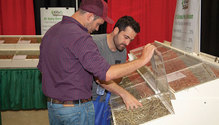
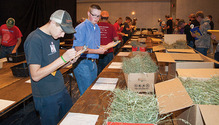
The blind check samples were unground to look as though they were bale-cored by growers or buyers. Undersander and Anderson packaged the samples, then sent them to NHA and N.A.M.A. members and customers to submit to labs. After getting results back from labs, the growers requested the samples back. Those samples, and the results, were sent on to the forage specialists to analyze and compare.

Athough NFTA funded the Wisconsin study, the only NFTA board members involved in it were NHA representatives and Under-sander. That was to help maintain the study’s integrity, explains Don Meyer, NFTA president and president of Rock River Laboratory, Watertown, WI.

“Some laboratories really did a poor job here and to continually protect those labs isn’t what we’re (NFTA) all about,” Meyer says. “But there’s a certain range of performance that labs can be in and you can still be confident in what they are doing. “Laboratories have introduced error into this process, but we need not lose sight of the fact that sampling is probably as big if not a larger error than laboratory error,” he adds.

For results reported by NFTA, visit www.foragetesting.org.

Labs Question Testing Approach

Most labs with highly variable results in the blind forage tests were called by this magazine just prior to publication of these stories.

They questioned how the blind samples and testing were done and many immediately called the exten- sion forage specialist in charge of their results.

The names of those labs were not published because of miscommunications between the NFTA-University of Wisconsin partnership and NFTA- member labs. Nebraska results, given out just prior to the magazine’s publication, were not published for similar reasons.

“We’re already making some good changes and we’ve learned things that will help the whole industry,” says Dan Undersander, University of Wisconsin forage specialist, of the blind test experience.

A part of that “good” is that most of the labs with wide varia- tion in results agreed to work with the university forage specialists and NFTA to check and/or improve their forage-testing methods and procedures.

Lab directors were also willing to have their labs blind-tested in the future and to have the results published.

Continued on next page...

Please Comment!

Want to comment on your experiences with forage testing? Hay & Forage Grower will post responses online. Email: hfg@hayandforage.com to submit comments.

View Forage Testing locations near you on our 2008 NFTA Certified Testing Labs page


Want to use this article? Click here for options!
© 2008 Penton Media Inc.

Research in Brief

The following items report on forage-related research recently presented by University experts at meetings across the country.

Browse Back Issues

  • May 2008 Cover
  • April 2007 Cover
  • March 2008 Cover
  • February 2008 Cover
  • January 2008 Cover
  • November 2007 Cover

Resources

  • USDA Hay Prices
  • Horse Fodder
  • Product Info
  • Custom Forage Harvesting
  • Industry Links
  • National Alfalfa Symposium
AgribizJobs.com - find agriculture jobs near you!

Marketplace Ads

  • Hay for Sale

    Hay for Sale/Wanted Listings

  • Your ad Here!

    Advertise your business here! Find out how.

  • Ag Maps for sale

    Ag Maps for Sale!

Back to Top