Farmers remember the sting of high fertilizer prices in 2022 and the bite that expense took out of their budgets. Fortunately, fertilizer prices have dropped drastically since that steep peak — but they seem to be on the rise again.
Forages, like most crops, require sufficient macronutrients — nitrogen, phosphorus, and potassium — to reach their productive potential. Focusing on the former item on that list, the most common forms of nitrogen applied to forages are urea, liquid nitrogen, and di-ammonium phosphate (DAP).
According to USDA’s Agricultural Marketing Service bi-weekly production cost report for Illinois released on Dec. 12, average urea and liquid nitrogen prices were $607 and $441 per ton, respectively. The average price for DAP was $870 per ton. Fertilizer analysts suggest a more positive price outlook for 2026, but there are several factors that can affect nitrogen fertilizer supply and demand. Those include geopolitical conflicts that interrupt global supply chains, transportation disruptions, and weather conditions. The number of corn acres U.S. farmers plant next year will also play a role.
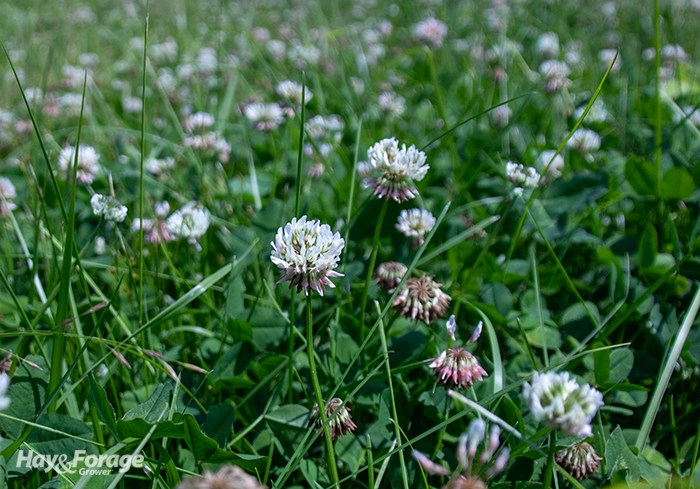
With that said, there is a solution to curb high fertilizer prices and minimize the risk of uncertain supply: frost seeding legumes. Legumes fix nitrogen from the atmosphere in their roots, which eventually slough off and give surrounding plants a nitrogen boost. Therefore, frost seeding species like red or white clover into established pastures can offset fertilizer prices for grass forages.
In most regions, frost seeding typically occurs in February or March when air temperatures start to fluctuate around freezing. Ideally, the repeated freeze-thaw cycles will incorporate seeds into the soil. Even though there is plenty of time to prepare for this planting, consider the following to increase the likelihood that your frost seeding is a successful one.
Support new seedlings
Germination after frost seeding hinges on good seed-to-soil contact — and favorable weather. While the latter can’t be guaranteed, there are ways to ensure seeds have a fair shot at establishment and avoid unwanted competition.
Check all the agronomic boxes. These include testing soil prior to frost seeding and adjusting fertility and pH to optimal levels. Moreover, use high-quality seed and determine the proper seeding rate for your field conditions and goals.
Expose the soil. Fields selected for frost seeding must be prepped in advanced to reduce biomass and open up the soil surface, either with a close graze or cutting. In northern areas, this needs to happen in the fall, whereas more southern pastures can be grazed down shortly before frost seeding.
Choose your trade-off. Using a drill will inherently create more seed-to-soil contact compared to broadcast seeding, resulting in better germination rates. However, drilling seed equates to higher equipment costs. The trade-off lies in which expense you’d rather pay for.
Reduce competition. Established forages will compete with new seedlings for light, water, and soil nutrients. In regions where the rest of the pasture is actively growing during late winter or early spring, frost-seeded pastures should be grazed soon after establishment to manage top growth. Keep this grazing event brief so animals don’t have the chance to eat new legume seedlings. Once those seedlings are 6 inches in height or taller, pastures can be grazed like normal.
In addition to providing nitrogen to surrounding plants, legumes offer other benefits to perennial grass pastures, such as boosting overall protein content and adding diversity to the stand. And in cases where those perennial grass pastures are anchored in toxic-endophyte tall fescue, legumes like red and white clover have been heralded for their dilution effect, which reduces the negative symptoms of fescue toxicosis.