While during any television broadcast of our local Milwaukee Brewers, the pitcher inevitably throws a neck-high fastball over the plate. Often, the batter unloads on such a pitch but misses by a foot. It’s then that our local color commentator and former big-league catcher, Bill “Rock” Schroeder, usually responds with these words of baseball wisdom: “That high fastball is like chocolate cake — it looks good, but it’s bad for ‘ya.’”
That same chocolate cake analogy might be extended to heat-damaged hay.
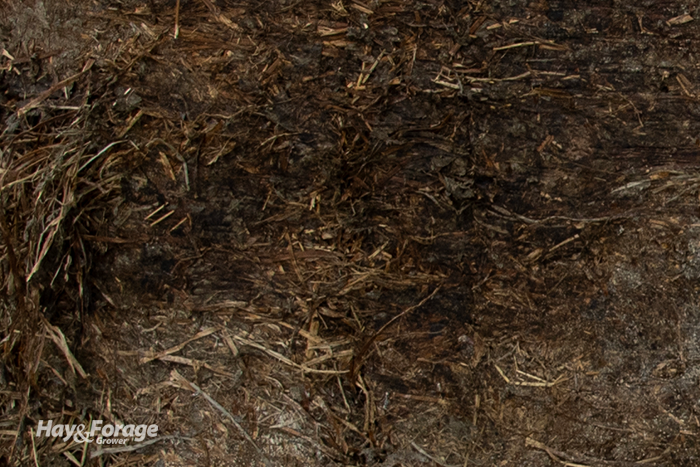
Cattle will often seek out caramelized, heat-damaged hay, but the sweet-smelling, tobacco-like product offers little to no feed value. We can blame that on a chemical process known as the Maillard reaction. It’s the same thing that happens to a seared steak or when bread is baked.
I still occasionally hear or read comments from some farmers expounding on the fact that their cows seem to relish hay that “got a little hot and turned brown.”
Caramelized, heat-damaged hay is the result of a detrimental nutrient transformation in an aerobic environment with moisture as the catalyst. The same thing can happen to haylage where oxygen is present.
The Maillard reaction often occurs when the temperature of the inadequately cured hay reaches 140°F to 170°F. It is a nonenzymatic reaction and binds the heated forages’ carbohydrates (sugars) and proteins (amino acids) together. This renders a large portion of dietary proteins unavailable to consuming livestock.
Test any hay that has been baled wet for heat damaged protein (HDP) or acid detergent fiber crude protein (ADF-CP). Some labs will report adjusted crude protein to account for the heat damage. These values will indicate how much unavailable protein there is due to the Maillard reaction. Livestock rations need to be adjusted to ensure adequate protein and energy intake.
If caramelized hay must be fed, target animal classes with lower nutrient requirements instead of lactating or growing animals. Often, dilution is the solution.