Another year in the books marks our annual wrap-up of weekly hay and forage coverage. We’ve compiled the top 10 most-clicked eHay Weekly articles from the past 12 months in the order of when they appeared in your inbox. The articles vary in topic, from the debut of the small square double baler to hay cutting quandaries and strategies to support drought-stressed pastures.
As you take a look back on our year in review, we invite you to come along for the ride again in 2026 as we continue to bring you relevant information on forage production, storage, utilization, and marketing every Tuesday morning. Thank you for your readership in 2025, and may you have a happy and healthy new year.
Double baler unveiled this month — Feb. 11
Hesston by Massey Ferguson debuted its small square double baler, designed to double the capacity of a typical single-line baler producing 14-by-16-inch bales. The new machine is just one example of recent innovations for once-stagnant small square bale technology.
Have you tried growing teff? — April 1
Teffgrass has gained traction as a versatile, soft-textured hay crop with attributes that appeal to the equine market. Growing teffgrass is not without its challenges, though, and requires careful management.
Our annual look at custom fieldwork rates — April 1
This annual summary of custom farming rates by state once again makes our list of most popular articles.
Death by lethal ingestion — April 8
Every part of a poison hemlock plant is toxic to livestock — even in small amounts. Early control of this biennial weed is key to controlling it in pastures and hayfields.
There are no first-cut mulligans — April 15
Second chances don’t exist during first cutting. The consequences of an ill-timed hay harvest not only affect subsequent cuttings, but also future livestock performance or the ability to sell hay at a premium price.
Tedding hay has its trade-offs — May 27
Should you ted hay? It depends. Shaving off days of dry down to preserve forage quality or avoid impending rain could come at the expense of additional leaf shatter and equipment costs.
Here’s why you should stop making hay — Aug. 12
There are many arguments to be made for cattle graziers to stop making hay. Grazing alternative forages, utilizing winter pastures, and outsourcing all hay needs could equate to a more cost-effective feeding program.
Hay seller bilked out of $8,000 — Nov. 25
Selling hay often puts producers in the position of being unsecured creditors. Stories like that of this Oklahoma farmer’s offer stark reminders of what happens when buyers don’t play fair in the hay market.
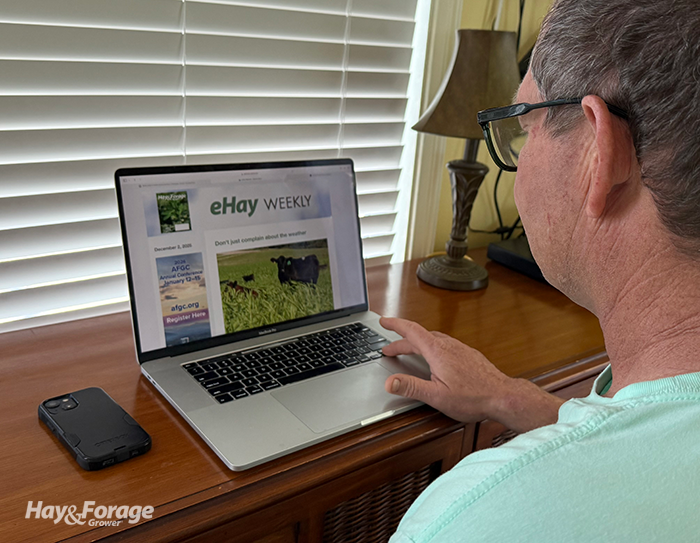
Don’t just complain about the weather — Dec. 2
Drought is less likely the main cause of pasture decline and more so the straw that breaks the camel’s back on top of several other plant stressors. Grazing strategies, forage management, and thoughtful planning can help prevent damage in drought-prone pastures.
Forage pest invades the US — Dec. 16
The pasture mealybug was confirmed in several Texas counties, marking its first appearance on North American soil. The pest feeds on several grass species and threatens forage production across the Southeast.