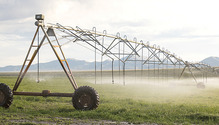
Winecup Gamble Ranch has 1,500 acres of pivot-irrigated fields and another 500 acres under wheel and flood irrigation. Only 7 inches of precipitation is received annually. The high desert of nort
Who doesn’t like a good debate?Perhaps one of the greatest learning and decision-making tools a person can employ is to take an opposite view, whether you believe it or not, and engage in debate
Hay & Forage Grower talks with Craig Roberts, University of Missouri Extension forage specialist. His work and interest in fescue toxicosis has him involved in a genetic test for tolerance in cattle
tithe \tith\ n : a tenth part paid or given It’s usually about this time of year when churches across the U.S. begin their pledge campaigns to meet the ensuing year’s budget
Whether you’re cutting alfalfa in southern Vermont or northern California, one commonality across the miles is that first-cut alfalfa is different than all of the rest
Peter Ballerstedt HFG: It seems that the amount of science devoted to forage grass development and management is at an all-time high. Do you agree? PB: I agree. Today we’ve seen the int
Even the name — fescue toxicosis — sounds like life support is eminent. Though it’s been known about for years, fescue toxicosis continues to haunt the livestock industry in a manner
Joe Bouton HFG: Looking back on your 27 years at the University of Georgia, is there any one accomplishment that holds special significance for you? JB: I cannot say there was one particul
In a job like mine, traveling to meetings and conferences around the country comes with the territory. Following a slug of recent fall and winter forage fests, one of the many things I’v
Not long ago I was sitting in a farm office talking to a dairy producer about his forage cropping program. Amongst the flurry of questions I asked was, “What is your alfalfa seeding rate?”
Dave Whalen, Director of regulatory affairs and new trait development for Forage Genetics International HFG: We’ve been talking about transgenic low-lignin alfalfa varieties for a long time. How
Agriculturally, you might call it dormant or fallow. That’s been the status of Hay & Forage Grower magazine since late last year when its publisher terminated the publication