With the holiday festivities in the rearview mirror, it’s time to look ahead toward the upcoming growing season. For graziers, one of the first calls to duty is frost seeding clovers into perennial pastures that have reverted to mostly grass species.
The frost-seeding line will begin to move from south to north in a couple of weeks. Few practices can offer the rate of return inherent with a successful frost seeding. The practice involves minimal expense but yields improved livestock performance, biologically fixed nitrogen fertilizer, and in the case of Kentucky 31 tall fescue, a means of diluting its toxicity.
In addition to providing nitrogen, frost-seeded legumes help round out the protein portion of the livestock diet. That’s important for meat animals, but it’s critical for lactating animals and grass-fed stockers. Legumes also add diversity to the sward and help maintain pasture production during times when grass growth lags.
Frost seeding is easier and quicker than conventional seeding, but it also has a higher inherent risk for failure, so attention to detail is essential. There is less room for error when frost seeding. But even when everything is done by the book, adverse weather conditions can thwart the best of efforts.
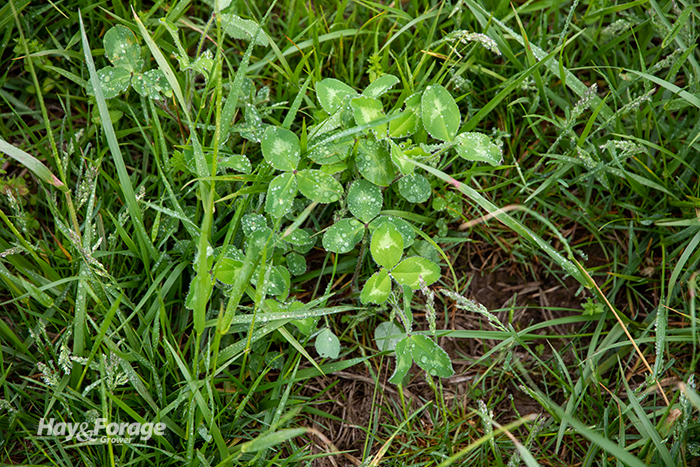
Frost seeding is almost always done to establish red, white, or some other type of clover in pastures, although some success has been experienced with other types of legumes and ryegrass. Without question, red clover offers the easiest and most productive road to frost-seeding success.
Other than weather, failed frost seedings usually occur because of poor seed-to-soil contact or an abundance of competition soon after seedlings establish.
Get seed to soil
In the North, paddocks designated for frost seeding will benefit from being grazed short in late fall, exposing more soil for the broadcast seeds to land on. Farther south, grazing to remove residue can sometimes be accomplished right before frost seeding.
Frost seeding clovers into a bunch-grass species such as orchardgrass will be more successful than into a heavy sod-forming grass such as Kentucky bluegrass. In the latter case, soil exposure is difficult to achieve.
Although broadcasting seed on the field with an all-terrain vehicle (ATV) or tractor-mounted seeder is a popular means of frost seeding, some farmers prefer to use a drill, which bumps the expense and time commitment but helps to ensure seed-to-soil contact. If using a drill, the soil must be thawed to allow for seed placement. Seeding with a drill will almost always result in improved germination and establishment, so a lower seeding rate is needed compared to broadcasting seed on top of frozen ground.
Reduce competition
Once germination occurs and seedlings emerge, they will need to establish under an existing sward, which is competing for light, nutrients, and water. Existing pasture species don’t wait for their young pasture brothers and sisters to catch up, so minimizing competition is another key to success.
Once seedlings establish, remove some of that fast-growing top growth to open the stand, but in doing so, don’t allow cattle enough time that they begin eating the new seedlings. When the legume seedlings reach about 6-inches tall, paddocks can be put back into the normal grazing rotation.
Finally, ensure soil fertility and pH are at recommended levels. Use quality seed from improved varieties and seed at an effective rate. These things will contribute to frost-seeding success; however, they won’t overcome poor seed-to-soil contact and/or excessive competition after establishment.