History tells us that nearly all markets go through boom-and-bust phases, unless those markets are artificially controlled by the government or with some other means. The interesting thing is that whatever phase is currently prevailing, we think and operate as if it will be a permanent fixture.
We see this same phenomenon occur with sports teams, especially baseball. Our opinions and prediction of a season’s outcome often hinge on whether the team is on a six-game winning streak or six-game losing streak within the 162-game schedule. It’s crazy, but I guess it can simply be chalked up to human nature.
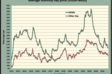
Exactly three years ago, I wrote an article titled “Will hay prices turn south in 2023?” We had just come through a banner hay-price year when the average alfalfa price for all qualities broke through $280 per ton. Alfalfa and other hay exports were at or near record levels as we recovered from a crippling pandemic. It was a good time to be a commercial hay producer, even if input costs had also taken a considerable jump in previous years.
As it turned out, hay prices did stay strong through about the first half of 2023, then they began to tumble along with other commodity feeds. Not even export growth could sustain as China’s appetite for dairy and alfalfa hay began to wane and exporters took a hard one to the jaw. In short, hay markets are on a bit of a losing streak.
So, what will happen to hay prices in 2026? As you will see, there isn’t much reason to believe that a stronger market is within spitting distance unless Mother Nature decides to shut off the spigot over a wide swath of the U.S. — but all is not lost.
Hay stocks
USDA will report its December 1 hay stocks tally on January 12. What we know is that May 1 stocks climbed 15% in 2025 and by 47% from 2023 to 2024.
In their November Crop Production report, USDA forecasted alfalfa and grass hay harvested acres to be slightly higher in 2025 than 2024; total production is estimated to be at least on par with 2024. Final statistics will be available on January 12.
December 1 stocks offer a good starting point of how well the market will be buffered by any negative production factors in 2026. It’s likely that the January 12 report will depict a picture of high variability between regions. Many areas had weather challenges, as seems to always be the case.
The stocks report doesn’t differentiate based on forage quality, and this is an important point to consider. High-quality hay always sells for a premium price in dairy and equine markets; it’s also often in short supply. Challenging weather for haymakers usually impacts either quality or yield, but less often both at the same time.
Acres
Detailed (state by state) numbers for hay acres and production weren’t reported this year in October because of the government shutdown. Stay tuned for the January 12 report.
Exports
Through September, all-hay exports were down 13% compared to the first three quarters of 2024. Shipments of alfalfa to China through September were down 20%. An economic downturn coupled with an overexpansion of the dairy industry in China are largely to blame for the drastic reduction in U.S. alfalfa imports to that country.
According to The Hoyt Report, the only good alfalfa export news lies with Saudi Arabia, which has imported 17% more product through September than in the previous year.
“Exports fell 26% from 2022 to 2023, driven by fewer cattle in key Asian-importing countries, a shift toward more grain-heavy rations, and the headwind of a strong U.S. dollar,” writes Josh Callen, author of the The Hoyt Report. “This shift has also hurt growers, as export buyers had absorbed declining domestic dairy demand for alfalfa over the past decade. West Coast growers reported average big-bale alfalfa prices running $20 to $30 below breakeven, with some even refinancing paid-off ground to continue operating.”
Livestock
Dairy had a good price run, but that’s come to an abrupt end. USDA pegs Class III futures below $16 per hundredweight for the next several months as bulk tanks overflow. The December Milk Production report pegged November milk output at 4.5% higher than the previous year. The collective U.S. milking herd has swelled to 9.57 million head, 211,000 more cows than November 2024.
Hay producers can look at the recent dairy situation with a glass half full or half empty mindset: More mouths to feed but with less money to feed them.
Beef prices remain strong while the collective U.S. herd struggles to add numbers. Most experts feel it will take at least a couple of more years before cow numbers build back.
For commercial hay farmers who cater to the equine industry and retail outlets, the market situation has been more palatable. Hay prices have fluctuated less for these buyers and allowed haymakers to still realize some level of profit for a quality product.
Competitive feeds
Hay prices have historically followed those of other competitive feedstuffs, and the correlation is strong. Commodities such as corn and soybeans have suffered the same price reductions as hay — if not worse.
It’s probably not a big leap to think that hay prices won’t get better until competitive commodity prices also improve. For that to happen, it will likely take a significant weather event in 2026 that will slash overall production. Acreage numbers and foreign production also come into play. Most analysts believe that commodity prices have bottomed, which is news that offers some optimism.
Steady as she goes
As we flip the calendars to 2026, there’s unfortunately no predictable market movers that indicate hay prices will significantly climb in the months ahead. Of course, weather is always the wild card, but it’s also a double-edged sword. Those weather events that tend to push the price needle north also limit production.
There remain many factors that could help improve the current hay price and margin situation, and let’s hope at least some of them come to fruition. They include:
• Stronger prices for competitive feeds
• A more favorable trade and tariff environment
• An improved dairy situation by the end of 2026
• Lower input prices
• Hay stocks drawdown
• Improved water availability
Current hay prices are not where most commercial haymakers would like them to be, but like the market downturns of years gone by, this one, too, will pass.