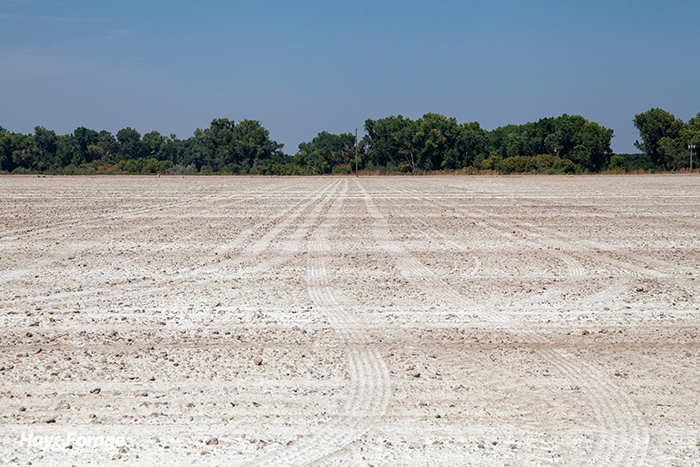
There are a lot of farmers who probably wish their ancestors had kept the Conestoga wagon moving before dropping anchor on a plot of land that would challenge family farm generations to come. There are also many reasons why this is so.
Challenging crop-growing soils come in many flavors, including rocks, clay, steep slopes, saline or sodic conditions, sand, inherent low fertility, and acidity. Each of these soil conditions limit the production of crops — some to the point where they can’t be grown at all, or at least not without significant additional expense.
Perhaps there is no better poster child to cite as an example than trying to grow alfalfa on acid soils. Either you invest heavily in lime, accept a significant yield hit, or find another crop to pay the bills.
The acidity of soils across the U.S. varies. Some of the largest pockets of acid soils are found in the Northeastern and Southeastern states, although acid soils exist to some degree in nearly every state.
Deborah Samac, a USDA-ARS scientist based at the University of Minnesota, and Ali Missaoui, a forage plant breeder with the University of Georgia, recently reviewed the progress being made to develop alfalfa varieties with tolerance to acid soils in a recent issue of the Midwest Forage Association’s Forage Focus magazine.
Why are soils acid?
If your family’s Conestoga stopped on an acid soil, it’s likely the parent materials that formed those soils were naturally low in basic chemical ions such as calcium, magnesium, potassium, and sodium. It could also be that those ions have leached from the soil because of rainfall or irrigation. The authors also explain that some soils have become acid over the years because of the frequent use of ammonium fertilizers.
Where soil pH is acidic, aluminum and manganese become soluble and are taken up by plant roots. This results in poor root proliferation and inhibits nitrogen fixation. With root growth compromised, nutrient and water uptake is reduced, which makes plants more vulnerable to drought stress.
Finding aluminum tolerance
Although liming soils will raise soil pH, it can be cost prohibitive. For this reason, alfalfa is not considered a viable crop alternative in many areas. However, if alfalfa varieties could be developed that have aluminum tolerance, this could drastically impact the number of acres where alfalfa is grown as a rotation crop.
Samac and Missaoui explain that research work is ongoing to develop or identify alfalfa germplasms with tolerance to acid soils. Scientists have shown that some naturally aluminum-tolerant crops secrete organic acids around the root zone, which binds the aluminum.
A few studies have shown that overexpressing organic acids in an alfalfa plant can significantly enhance aluminum tolerance. However, to achieve this result requires the transfer of genes, which complicates the process and cost of making such varieties commercially available.
A more conventional approach to developing alfalfa with acid soil tolerance is also underway. Recently, scientists at the University of Georgia tested 1,200 plants from areas around the world with low pH soils. They were evaluated for four years on a low-pH, high-aluminum soil, and the best 200 were selected for further testing in four different states (Georgia, South Carolina, Alabama, and Minnesota). These will be evaluated for yield, plant and root architecture, winterhardiness, and fall dormancy over two production years.
The top performers from this group will be used to identify DNA markers associated with acid soil tolerance. Ultimately, resources will be developed to allow alfalfa breeders to incorporate low pH and aluminum tolerance into already adapted varieties.