Bruno Pedreira summed up the impact that Hurricane Helene had on Southeastern forage systems in one word: devastating. The University of Tennessee Extension forage specialist shed light on the aftermath of the September 2024 natural disaster at the American Forage and Grassland Council’s Annual Conference last month in Asheville, N.C.
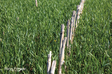
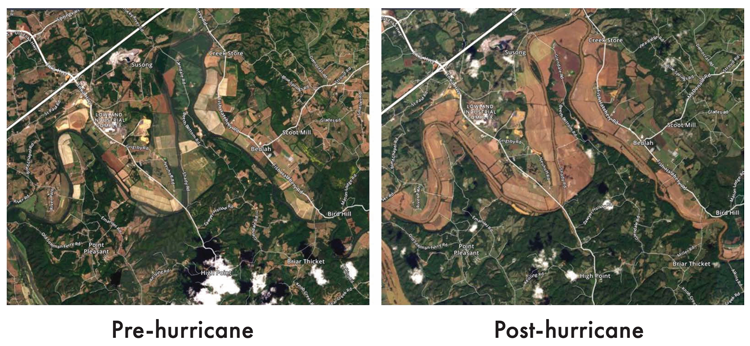
According to Pedreira, there was significant damage to more than 45,000 acres of pastures and hayfields along the Nolichucky River (see photo), which connects western North Carolina to eastern Tennessee. One farmer in that floodplain had more than 200 acres of pasture under water after the hurricane stormed through. When the water receded days later, that farmer and many others were left with mounds of sand and silt where forage used to grow — some up to 6 feet deep.
In the months to follow, University of Tennessee researchers analyzed sediment samples to measure organic matter and fertility. They also tested the sand and silt deposits for toxic metals that may have been carried in by contaminated floodwaters, for which all levels were well below dangerous thresholds. That was good news, Pedreira affirmed, but sand and silt weren’t the only things left behind by the hurricane.
“We found fields where up to 18 acres of pasture were now 18 acres of rocks,” he said.
Through the winter of 2024-25, researchers conducted greenhouse trials to see how forages would respond to the sediment. Pedreira said it was almost impossible to scratch the surface of samples with high sand content, and tall fescue and orchardgrass germination in this medium was very poor.
The researchers did discover that large-seed small grains — specifically oats and wheat — had better germination potential. But by the time spring rolled around, there was still major hurricane cleanup to be done, and trying to establish new forage was not a high priority for most farmers.
Heavy spring and summer rains caused gullies to develop and slice through sand-covered fields. Where silt deposits dominated, there was severe surface crusting. If there was an opportunity to plant, extension specialists encouraged farmers to seed a warm-season annual forage mix of crabgrass, millet, and cowpea. In many cases, rainfall was adequate and seedlings germinated well, but plants that were established into sand-heavy fields did not grow to be healthy.
“There is no water-holding capacity or nutrient-holding capacity,” Pedreira said. On the other hand, when the recovery mix was seeded into silt deposits, forage growth was much more promising, with some fields yielding up to 2.5 tons of forage three months later.
Last fall, University of Tennessee Extension started perennial forage seeding trials on both the sand and silt plots. The treatments include tall fescue, tall fescue with wheat, orchardgrass, and orchardgrass with oats.
“We are trying to see if we can bring perennial crops back,” Pedreira said. Three soil amendments are also being tested in the trials: woodchips, biochar, and flooded hay.
“I’ve been telling farmers to keep your faith; progress takes time,” Pedreira said. Establishing mixes of grasses, legumes, and large-seed species will be the first step in reviving hurricane-damaged pastures and hayfields. The road to recovery will take years to navigate, but Pedreira assured farmers that he and his colleagues are in it for the long haul.
This article appeared in the February 2026 issue of Hay & Forage Grower on page 29.
Not a subscriber? Click to get the print magazine.