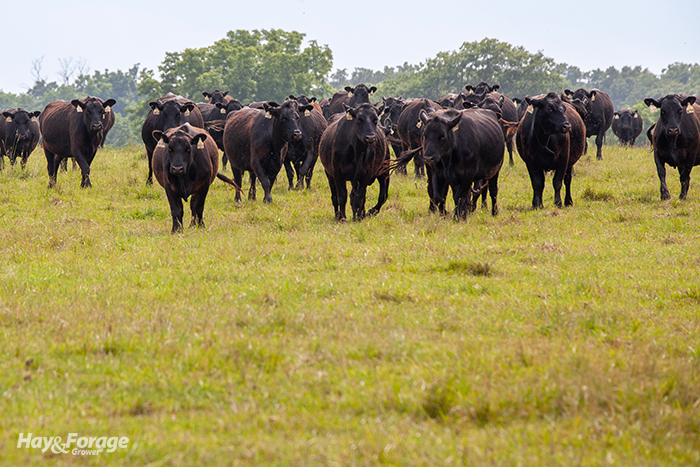
As the calendar turns to March, the anticipation of greener cool-season pastures heightens, and there’s hope that the winter drudgery of feeding stored forage will soon come to an end.
Although the vision of cows on grass is tantalizing, this is the time of year when it behooves graziers to pump the brakes before opening the pasture gates.
“Late-winter grazing pressure on cool-season pastures can compromise spring regrowth,” says University of Missouri Extension state grazing specialist Harley Naumann. “It is important to not begin grazing too early — at spring green-up, for example. When combined with the ever-present potential for drought, pastures can quickly be set up for failure. While we may be tired of feeding hay, avoid the temptation and delay turnout for the sake of pasture health and productivity,” he adds.
Naumann emphasizes that turning cattle into green pastures too soon can result in long-term damage by weakening plants and compromising carbohydrate reserves used for regrowth.
Time better spent
Delaying cattle turnout doesn’t mean there aren’t pasture-related chores to accomplish before the gate does open. The Missouri grazing specialist suggests using this time to assess inventories of both stored and pasture forages and inspect fences, water systems, and paddock layouts.
“Focus on setting appropriate rest and recovery periods,” Naumann says. “Of all the complex management considerations, this may be the most important for pasture productivity. It also requires a plan to monitor residuals according to targeted forage utilization, avoiding the common mistake of ‘rotational overgrazing.’ Be flexible and adjust your plan as needed during the growing season.”
Naumann cautions not to overgraze winter-stockpiled grass because this can weaken the forage stand. Forage budgeting, identifying deficits early, and developing contingency strategies such as early weaning, supplementation, or alternative forages may be needed to conserve your forage base. “The saying ‘It takes grass to grow grass’ couldn’t be truer,” Naumann asserts.
Room for improvement
Late winter also offers the opportunity for frost seeding legumes to bolster forage quality and production.
Naumann points out that cool-season grass pastures are not typically short on protein and energy during the spring, so he suggests that you consider complementing a forage system with a warm-season legume to boost productivity during the summer months. “Annual lespedeza can be frost seeded this time of year,” he notes. The benefits of lespedeza include improved forage quality, greater production during the summer slump, and nitrogen fixation.
Be patient
“As spring approaches, patience and planning now can pay dividends all grazing season long,” Naumann concludes. “Delay turnout, protect forage recovery, and make thoughtful adjustments to grazing plans for healthier pastures and more resilient forage systems. A few proactive decisions in late winter often make the difference between merely getting by and setting pastures up for long-term success.”