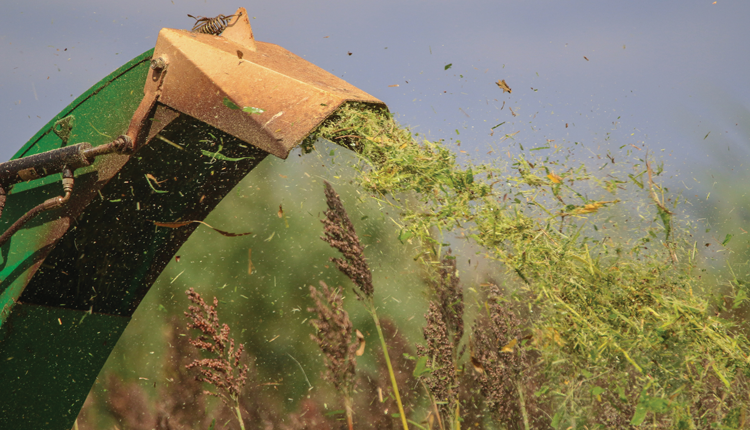
Silage sorghum is a niche, yet increasingly important, component of the U.S. forage landscape. Unlike grain sorghum grown primarily for grain and export, silage sorghum is grown specifically for biomass that is chopped and fermented for cattle. Nationally, silage sorghum occupies a small fraction of forage acreage compared to corn silage, but it plays a large role where heat, drought, or input costs make corn less attractive.
Silage sorghum is distinctly different than forage sorghums like sorghum-sudangrass hybrids for grazing or hay production and greenchop forage sorghum that doesn’t produce grain. Sorghum hybrids bred for silage production are taller and leafier than grain sorghum but have comparable grain yields.
Silage sorghum acreage is rapidly growing. In 2024, silage sorghum was produced on approximately 300,000 acres across the U.S. Geographically, that acreage was concentrated in the Central and Southern Plains — the same areas where grain sorghum is commonly grown.
Several agronomic and economic reasons make silage sorghum an attractive corn alternative. Sorghum is inherently more tolerant of water stress and high temperatures compared to corn. It can maintain yields under limited water, making it a reliable choice on dryland acres or where irrigation is constrained. In fact, extension and industry sources often cite sorghum’s ability to produce comparable yield and quality to corn silage using roughly one-third less water in irrigated environments.
Sorghum silage production also boasts lower input costs. Seed costs, fertilizer response, and crop protection needs for sorghum silage are often lower than for corn silage hybrids. Moreover, there are new sorghum silage hybrids, including brown midrib (BMR) types, that, when combined with new kernel processing equipment in silage harvesters, offer higher nutrient density and forage quality that is comparable to corn silage.
Revived research
The enhanced interest in silage sorghum has renewed breeding efforts. Breeding programs are introducing a range of specific traits designed to enhance forage quality, yield stability, and adaptability across diverse growing environments. These efforts reflect the dual need to make sorghum silage comparable in feeding value to corn silage while retaining sorghum’s natural advantages in water-use efficiency and drought tolerance. Modern hybrid development combines conventional selection with molecular breeding tools, enabling breeders to introduce complex trait combinations more efficiently.
One of the most important advancements in forage sorghum improvement is the incorporation of the BMR trait. This mutation reduces lignin content in the plant’s cell walls by altering key enzymes in the lignin biosynthesis pathway. Lower lignin levels improve fiber digestibility, allowing for greater dry matter intake and higher total digestible nutrients (TDN), which results in improved feed conversion and animal performance. Current breeding efforts aim to combine BMR genes with strong agronomic traits, such as high biomass yield, disease resistance, and lodging tolerance, to offset the slight yield reductions sometimes associated with BMR hybrids.
Another valuable improvement is the introduction of varying levels of photoperiod sensitivity. Grain production in photoperiod-sensitive hybrids is often delayed under long summer days, and this extended growth period leads to higher tonnage and maintains ideal moisture levels for silage harvest. Similarly, silage sorghum breeders are incorporating stay-green traits, which promote delayed leaf senescence and sustained photosynthetic activity during grain fill and drought stress. Stay-green hybrids maintain green leaf area later into the season, preserving both yield and forage quality, especially under water-limited conditions.
Efforts to enhance grain digestibility are also a priority. Sorghum kernels are typically harder and less digestible than corn kernels, limiting starch availability in the rumen. Breeding programs are evaluating silage hybrids with larger kernels, higher and/or more digestible protein, and some researchers are integrating high-amylopectin starch types into their programs to further enhance digestibility and fermentation efficiency. Whether these modifications reach commercial hybrids, they may have the potential to improve starch digestibility and energy availability, particularly when paired with effective kernel processing during harvest.
Better sugars and stems
Sorghum breeders are also working to boost soluble carbohydrate and sugar content in stems and leaves. Borrowing from sweet sorghum germplasm, these hybrids accumulate higher levels of fermentable sugars, which promote rapid silage fermentation and improve palatability. The challenge lies in maintaining this trait without raising moisture content or compromising lodging resistance or biomass yield, which breeders address through careful selection for stronger stalks and optimized plant architecture.
Lodging resistance remains a key selection criterion in any type of sorghum since high-yielding, tall hybrids can complicate harvest and reduce feed quality. Breeders select for thicker stalks, stronger rind tissues, and shorter internodes to improve standability while maintaining high biomass production. These physical traits complement improvements in disease and pest resistance, which protect leaves and stalks from major threats, such as anthracnose, rust, bacterial leaf streak, and sugarcane aphid. Marker-assisted selection and genomic tools are helping silage sorghum breeders stack resistance genes to provide durable protection without compromising forage quality.
Abiotic stress tolerance is another key, particularly against drought and heat. Sorghum’s inherent water-use efficiency provides a strong foundation, but this can be enhanced further with deeper rooting, improved stomatal regulation, and waxy leaf coatings. These adaptations help stabilize yield and quality under the dry, high-temperature conditions common in major sorghum-producing regions such as Texas, Kansas, and the western High Plains. In addition to these characteristics, low-dhurrin genotypes that have reduced prussic acid potential are being developed to improve safety for livestock, reducing the risk of cyanide toxicity when the crop is grazed or ensiled.
Options to control grass weeds in sorghum have traditionally been limited until the recent development and deployment of resistance to acetolactate synthase (ALS) and acetyl-CoA carboxylase (ACCase) herbicides in grain sorghum. These traits are now actively being introduced into forage and silage sorghums, so it is not unreasonable to expect that these hybrids will have herbicide resistance within two years.
Models that use genomic selection, phenotyping, and hybrid testing specifically for silage sorghum are in the final phases of development, and although these will not accelerate the improvement process, they will enable breeders to design hybrids tailored to specific environments and production systems. With that said, improvements in silage sorghum will not only come from genetics but also from advances in agronomic practices that maximize yield potential and forage quality.
Farmer efficiencies
Precision agriculture tools — such as variable-rate seeding, site-specific irrigation, and nutrient management — will allow growers to optimize plant density, water use, and fertilizer efficiency based on soil and environmental variability. Targeted harvest timing and cutting height recommendations will help balance starch accumulation with fiber digestibility, ensuring higher total digestible nutrients are available in the ensiled material.
The use of kernel processors and specialized forage harvesters will further enhance starch availability from the grain portion of silage sorghum. Additionally, integrated crop rotations with legumes or cover crops can improve soil structure, nitrogen availability, and water infiltration, leading to more sustainable production systems.
Research into silage inoculants and fermentation will continue to improve preservation quality, reduce losses, and enhance feed stability. Collectively, these agronomic innovations — combined with improved hybrid genetics — will enable silage sorghum to achieve higher productivity, superior forage quality, and greater consistency across diverse U.S. growing regions.
Silage sorghum is a relatively new and important forage crop that will play a major role in water-limited environments. The deployment of these hybrids in the Southern Great Plains provides a mechanism to use the available irrigation water more efficiently, extending a valuable resource that is required for feed crop production in the region. The development of silage sorghum hybrids, updated harvest technology, proactive inoculant use, and better feeding practices have transformed it from a “backup forage” into a strategic, water-efficient crop.
This article appeared in the January 2026 issue of Hay & Forage Grower on page 30.
Not a subscriber? Click to get the print magazine.