We’ve had a lot of conversations with other producers about selling beef directly to consumers. Some are already doing it; a lot more are thinking about it. Almost every one of those conversations starts the same way: “I’m pretty sure I can make more money selling beef than just selling cattle at the sale barn.”
On the surface, it’s logical. We see the retail price of a rib eye, compare it to what we receive at the sale barn, and the middleman’s profit looks like an interesting opportunity. While the potential for better revenue is real, what often gets lost is how dramatically the economics, risk, and cash flow change the moment you stop selling live animals and start selling food.
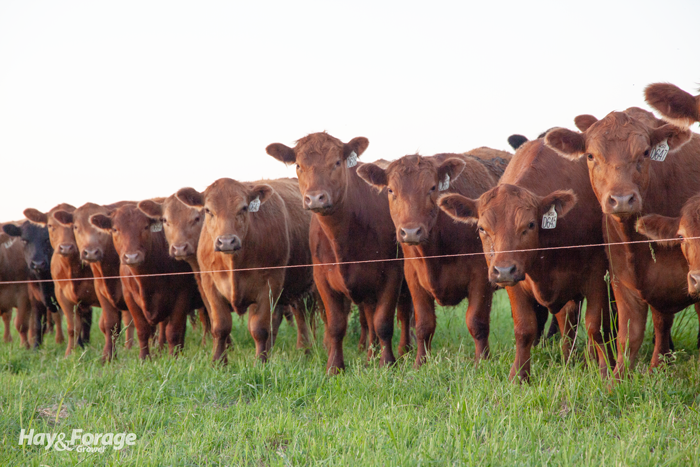
To pull back the curtain, let’s look at a 1,000-pound steer on our ranch. In today’s strong market, this 28-month-old animal is worth about $3,200 at the sale barn. If we hauled him to town today, that value would be realized immediately. A check would be cut, risk would transfer, and our responsibility would end at the gate. That is the clean exit of the traditional cattle business. Instead, we’re going to keep him and sell him as beef.
It’s worth knowing what it cost to get here. Using recent Oklahoma State University estimates, the cost to run a cow is about $1,100 per year, or roughly $90 per month. If we account for cow costs through gestation and weaning, assuming this steer was weaned at 500 pounds and 8 months of age, the cost to get him to that point is about $1,530 (roughly 17 months at $90 per month). From weaning to harvest then takes another 20 months. In an efficient, low-input pasture system, we might be able to put that gain on an animal for about $1 per day. Over roughly 600 days, that’s $600 total, or about $1.20 per pound of gain. So, our cost to raise this animal to 1,000 pounds in our grazing system has climbed to $2,130 ($1,530 with mom plus $600 without mom). But that $2,130 is already spent whether we sell him live or as beef. It’s a sunk cost. The $3,200 sale barn price already reflects the value that investment created. The real question is what happens next.
We have a $3,200 asset. Sell him live, subtract $2,130 in raising costs, and we net about $1,070. That $1,070 represents nearly three years of investment in the cow and calf. Now, what does it take to beat that through retail?
Processing is the first additional cost. Between slaughter, cut-and-wrap, inspection, and disposal fees, we’re looking at roughly $1,000 per head just to turn a live animal into a sellable product. After that check is written, we’re left with about 450 pounds of packaged beef. But nothing has been sold yet — it’s just sitting in a freezer! This is where ranching ends and retail begins. From this point, you’re paying for freezer space and electricity, marketing fees, and farmers market booth fees. You’re managing inventory, handling customer communication, processing payments, coordinating deliveries, and absorbing shrink and unsold cuts. Unlike the sale barn, where inventory clears in an afternoon, retail beef often moves over weeks or months.
Here’s the math: We gave up a known $3,200 sale and spent an additional $1,000 in processing. That means our 450 pounds of beef must generate at least $4,200 in revenue — about $9.30 per pound — just to match what the sale barn would have paid. And that’s before generating a single dollar of retail overhead. Once we account for freezer costs, marketing, delivery, waste of unsold product, and the time value of money sitting in a freezer instead of a bank account, a realistic breakeven is closer to $12 to $14 per pound. It’s achievable, but the margin of error is thinner than most people expect.
This doesn’t mean selling beef is a bad decision. The takeaway is simple, though not always easy: Do the math, and do it without emotion. Understand that you are choosing to operate two businesses at once, a ranch and a retail enterprise. Both can be profitable, but both demand discipline, capital, and a sharp pencil. If you can price your beef to stay in business for the long haul, fantastic. If not, don’t go broke trying to skip the middleman.