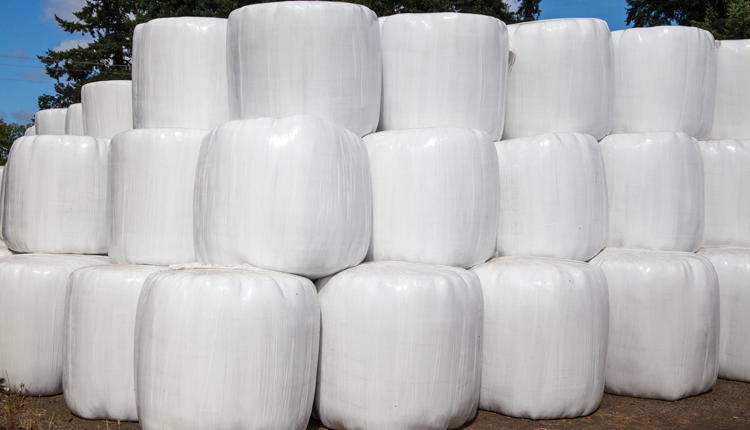
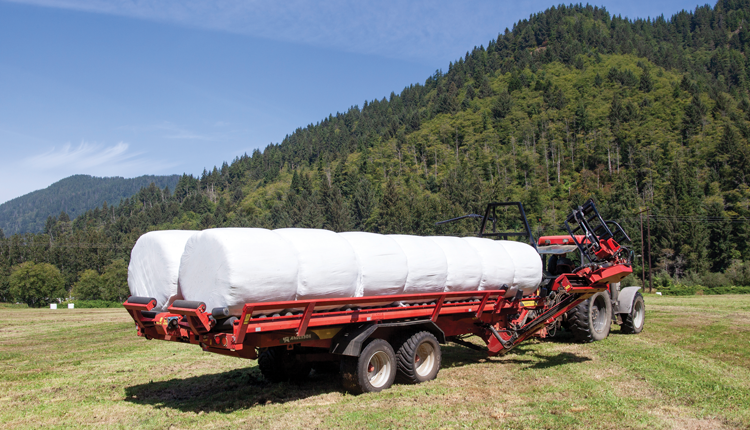
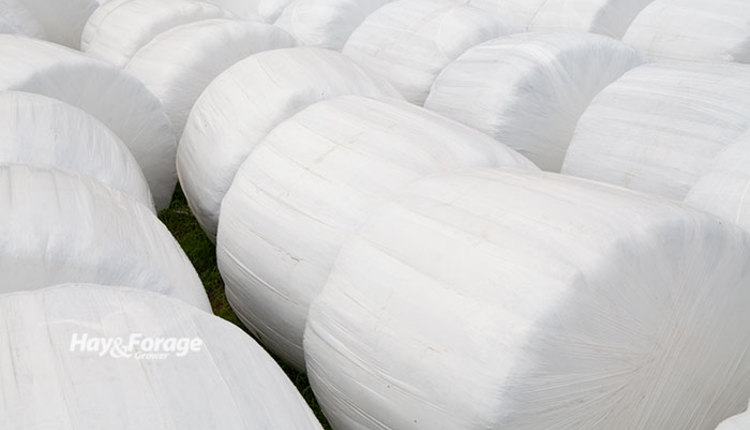
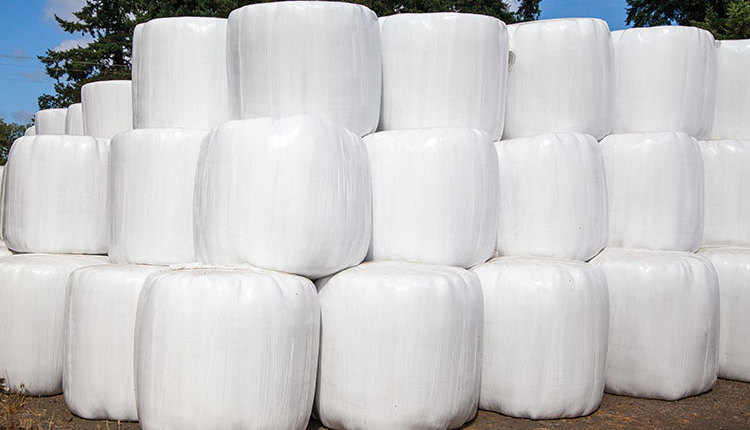
Oct. 14 2024 The concept of preserving forages as baled silage has become more popular throughout many regions of North America, and particularly in areas where weather norms make baling dry hay difficult and frustrating
March 31 2023 Farmers attempting to bale dry hay while fighting weather that is too wet and/or too cool for drying to 15% to 17% moisture may have another option. Alfalfa Checkoff-funded research found that wrapping...
April 28 2021 Managing bale moisture is an important consideration in properly conserving high-quality baled silages for subsequent cash sale or use in livestock feeding operations
Jan. 16 2019 The use of baled silage techniques for forage preservation has expanded significantly during the last decade and is especially popular with small or mid-sized dairy and beef producers
Nov. 15 2017 Wrapping moist, large round or square bales in plastic to create an anaerobic environment for silage fermentation has gained steadily in popularity, particularly for small and midsized dairy or beef producers