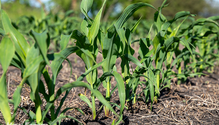
Brown midrib (BMR) corn has been a key player in the starting lineup of many dairy farmers’ feed crop rotations. But now that BMR hybrids are being called off the court and phased off the market,
The ability of ruminant animals to turn forage fiber into milk and meat is the cornerstone process of livestock production, and it has a direct effect on the sustainability of human food systems. The
When walking a feedbunk filled with a total mixed ration (TMR) containing some haylage, it’s pretty easy to spot haylage chunks that didn’t get broken up and mixed. These chunks stick out like
I’ve recently opted for a diesel truck, primarily to step up the range between fuel stops. It’s got a 33-gallon fuel tank, but the range equation is more than just a larger fuel tank. Both
Feed and forage analysis interpretation in most cases begins and ends with a focus on protein and carbohydrate measures. The prior two articles in this series centered upon improving your ability to u
Several scientists have contributed enormously to the dairy industry during the past 50 years, and Dave Mertens might be at the top of the list. If you still need convinced of this reasoning, I invite
In the August/September “Feed Analysis” column, we delved into forage protein and its associated complex feed analysis measures. The nitrogen and amino acids in forage are valuable, with protein
During nutrition workshops with students and industry professionals, I generally break nutrition analysis training down into sections corresponding to nutrients or nutrient digestion measures
As the weather trends hotter, cold and sweet treats become more appealing. My two kids, aged 7 and 8 years old, have inherited my late father’s sweet tooth
Mining for precious metals or diamonds requires tried and true equipment and techniques. Simply walking around aimlessly with a metal detector or sifting the dirt won’t often prove successful
“One of the major factors negatively impacting harvested alfalfa forage quality is leaf loss,” asserted David Weakley, director of forage research nutrition for Forage Genetics Internatinoal
Although growers in the West and the South are well underway with this year’s alfalfa harvest, those in the Northern half of the U.S. are still greasing their mowers
Forage quality is often discussed and written about. Often, through experience, we understand improved fiber and starch digestibility to mean more energy available per pound of silage fed
The scenario is a common one: The cows aren’t eating a new batch of silage and performance is down. It may simply be a forage quality or moisture issue, or it may be “something else.”
An alfalfa hay sample submitted by Flatwood Farms, Murrayville, Ga., had the highest relative forage quality (RFQ) in this year’s Southeastern Hay Contest presented by Massey Ferguson
There are different paths to optimal forage quality and animal performance for hay and haylage crops versus corn silage. With hay and haylage crops, cutting the crop at the correct plant maturity is a