Below-freezing temperatures, negative windchills, and winter storm warnings don’t exactly spell “spring,” nor do those conditions bode well for spring calving season. In addition to inclement weather, scours is another serious impediment for spring-calving systems, causing stress to both animals and their owners.
Roslynn Biggs, D.V.M., is the state beef cattle specialist with Oklahoma State University Extension. In a recent Cow-Calf Corner newsletter, she says scours is usually an outbreak just waiting to happen and is rarely caused by a single factor. The disease remains one of the most common health challenges facing cow-calf producers.
“Diarrhea results from the interaction between disease-causing organisms, the calf, and its environment,” Briggs says. “Early in the calving season, cows typically give birth on clean ground with no older calves present. As calving progresses, disease risk increases as pathogens accumulate and younger calves are exposed to older calves shedding infectious organisms.”
Maintaining clean pastures minimizes the environmental factor of scours development, which is the main idea of the Sandhills calving system. The goal of this mitigation strategy is to essentially replicate the clean ground from the beginning of the calving season to the end by rotating pregnant cows to new forage.
How it works
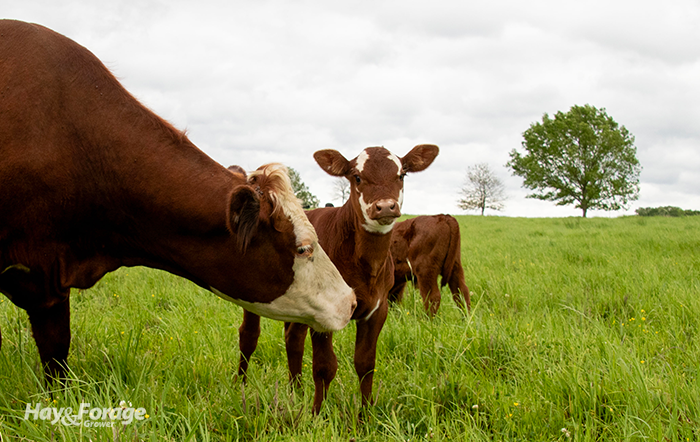
Start with all pregnant cows in the same pasture. After one to two weeks, move cows that haven’t calved to a new paddock, while the first cow-calf pairs stay in the first field. One to two weeks after that, rotate the still-pregnant cows to a third paddock and keep the cow-calf pairs from the second phase in the second field. Repeat this process until all cows have calved.
“By separating calves by age, younger calves have limited contact with older calves that may be shedding pathogens,” Briggs writes. “Producers who adopt this system often report fewer cases of calf scours, reduced treatment rates, and improved calf survival. The benefits can also translate into lower labor demands and decreased treatment costs,” she adds.
Better herd monitoring and improved recordkeeping are other advantages of the Sandhills calving system. Briggs notes that managing smaller groups of cow-calf pairs allows farmers to track animal health more closely, identifying illnesses earlier and providing more targeted care.
“Implementing the Sandhills calving system does require advanced planning,” she asserts. “Pasture availability, water access, shelter, forage use, and weather conditions must be considered.”
With that said, the Sandhills calving system isn’t a replacement for sound nutrition or vaccination programs — it is essentially a tool to help streamline those aspects of cow-calf management. “For producers facing recurring calf scours or seeking to improve calving-season efficiency, the Sandhills calving system is worth consideration as a proactive investment in calf health and herd productivity,” Briggs says.