Livestock producers know that defecation is daily, and if livestock were penned, then serious piles would accumulate over time. Livestock excrement contains nutrients, and those nutrients can be a liability if only considered a waste. On the other hand, they can be a resource to feed the growth of fresh forage if distributed over a pasture.
When excrement is concentrated and treated as a waste that accumulates over time, nutrients contained within the area could be lost as runoff to nearby streams or be leached through the soil profile and possibly into underlying groundwater.
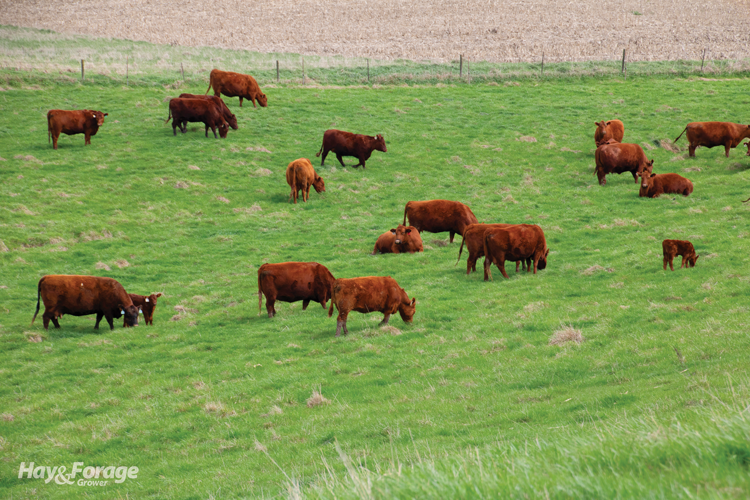
Pasture-based livestock systems distribute excrement better since animals are offered larger areas to graze, ruminate, and defecate. But there are areas of concentrated nutrients in many pastures, too, as there is typically a single source of water or a part of the pasture that is shaded from the sun. Moreover, supplemental feed may be delivered to the same part of the pasture close to the gate.
So, how concentrated are soil nutrients in grazed pastures? This was a question our research team in North Carolina had a few years ago that we explored with the collaboration of six farms across the state.
Results varied
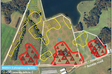
Using a grid-sampling approach, we collected soil at a 4-inch depth every 130 feet and analyzed samples for total organic matter, soil texture, biological activity, soil pH, cation exchange capacity, and routine soil chemical nutrients. A total of 110 to 140 samples were collected on each farm.
We expected soil properties to be concentrated in areas that were frequently visited by livestock, either to drink water, receive supplemental feed, or loaf under the shade. The full research results for the six private farms that practiced rotational stocking and the three research stations that utilized long-term winter feeding areas can be found by accessing the QR codes on the opposite page.
Considerable variation in soil properties occurred within the individual farms — which included eight to 14 fields — and among the six farms in the study. Some of these variations were natural due to physiographic characteristics like elevation, climate, and soil formation. Other variations were the result of management, such as different pasture characteristics according to forage species, stocking method, stocking rate, fertilization, and cultural practices.
Some key soil findings among the fields and across the farms included:
• Swine and poultry manure favorably enriched soil with infrequent applications; however, repeated applications led to excessive soil-test phosphorus and potassium.
• Positive impacts on total organic matter, particulate organic carbon, and soil-test biological activity occurred when livestock grazed perennial forages compared to annual forages or previous grain cropping.
• Enrichment of total organic matter, particulate organic carbon, and soil-test biological activity occurred with winter hay feeding, but excessive nutrient accumulation occurred if hay was repeatedly fed in the same location.
Congregating cattle
When defining an enrichment zone with elevated soil properties from four neighboring samples, the concentration of nutrients was associated with factors such as tree shade, drinking water location, or gates. These features attracted animals and led to feces and urine deposition, and the areas may have become denuded and susceptible to runoff loss and/or loss of forage. Hay feeding stations also attracted livestock and caused them to preferentially occupy smaller portions of a pasture. This led to an import and accumulation of organic nutrients in enrichment zones. Repeated animal behavior patterns that create enrichment zones and/or an accumulation of organic matter can enhance both soil microbial activity and sequestration of soil organic carbon.
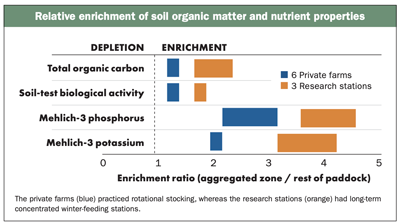
Across the six farms, 40% of the 49 total fields had some form of spatial aggregation — mostly nutrient enrichment, but also depletion zones. Only 5% of the fields had separate depletion and enrichment zones of significance in the same field. Although significant enrichment of nutrients on livestock farms was found, it was not a universal occurrence, and it could be controlled or managed with appropriate attention. Since all six farms practiced some form of rotational stocking for at least five years, the occurrence and intensity of the enrichment zones could have been mitigated. The magnitude of nutrient enrichment was not as large as it was when winter hay feeding was a routine operation in the same location due to convenience of farm infrastructure (see figure).
Overall, this study showed that improved grazing management can have positive impacts on beef farms in North Carolina, and likely in other states, too. Examples include rotational stocking, renovating pastures when needed, developing a silvopasture system to distribute shade and avoid congregation under trees, achieving year-round grazing with fall-stockpiled pastures, and closely assessing soil nutrients to avoid excessive applications.
This article appeared in the February 2026 issue of Hay & Forage Grower on page 12-13.
Not a subscriber? Click to get the print magazine.