Alfalfa is an important source of high-protein forage for cattle producers. James Coover, a soil scientist with K-State Research and Extension, wanted to better understand whether secondary and micronutrients such as sulfur and boron are limiting alfalfa production in Kansas soils.
“There are relatively few fertility studies focused on alfalfa in eastern Kansas,” Coover said. “We know boron is naturally deficient in many of our soils, and sulfur can be tricky in heavy clay soils. The question was whether what we were seeing in the field were true deficiencies and, if so, what we could realistically do about them.”
Interest in the project grew after Coover wrote a local agricultural column addressing suspected nutrient deficiencies in alfalfa. That sparked broader discussion among producers and researchers, ultimately leading to a more formal study to evaluate alfalfa response to boron and sulfur fertilization.
The research focused on alfalfa yield and forage quality response to boron and sulfur fertilizer. An established alfalfa field near Columbus, Kan., was selected, which had no recent history of boron or sulfur application. Because nutrient responses can be subtle, the study was designed to capture as much detail as possible. Five rates of boron and five rates of sulfur were applied in a replicated trial, resulting in 75 total plots. Over two years, researchers collected data from six harvests.
In addition to yield measurements, the team analyzed soil nutrient balance, monitored tissue nutrient concentrations, and conducted full forage quality analyses on every harvest. This comprehensive approach allowed researchers to evaluate not only yield response, but also how nutrients moved through the soil and plant system.
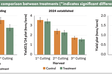
Across the two-year study, boron and sulfur applications produced mixed results. Boron levels were consistently low in surveyed fields across eastern Kansas, confirming that background boron deficiency is common in the region. Tissue boron levels increased with fertilization, though yield responses were inconsistent.
“If I had to boil this down to one takeaway,” Coover said, “it’s that farmers should be testing for more than just phosphorus and potassium. Secondary and micronutrients like boron matter.”
Likely benefit
The study suggested that applying 1 to 2 pounds of boron every couple of years may be beneficial in some fields. While yield gains were modest, the low cost of boron fertilizer means even small responses could provide a positive return.
Sulfur responses were more site-specific. Researchers expected a clearer sulfur response due to alfalfa’s high sulfur demand but only observed a slight yield improvement in the first cutting. Soil samples taken later in the season showed adequate sulfur levels, likely due to organic matter mineralization in the heavy clay soils at the site. “In a typical Kansas field, sulfur response is certainly possible,” Coover explained. “But in this particular soil, organic matter turnover was providing most of the crop’s sulfur needs.”
One of the biggest challenges of the study was weather. Summer rainfall during 2023 and 2024 was well below average, leading to delayed harvests and variability in summer yields.
“In nonirrigated alfalfa, summer yield is completely dependent on rain,” Coover said. Spring harvests, when soil moisture was more adequate, showed more consistent yields across treatments, while summer yields were highly variable.
The research reinforces the importance of comprehensive soil testing. While the results did not justify blanket recommendations for boron or sulfur application, they highlighted the potential for overlooked nutrient limitations. “Farmers are going to look at this and ask whether there’s some low-hanging fruit in their fertility program,” Coover said. “Running a full soil analysis, including micronutrients, is a good place to start.”
A full copy of the final report can be found at alfalfa.org.

This article appeared in the March 2026 issue of Hay & Forage Grower on pages 24-25.
Not a subscriber? Click to get the print magazine.