Alfalfa’s perennial nature is both a blessing and a curse. On one hand, it provides high-quality forage cutting after cutting, and its establishment costs can be spread over several years of a productive lifetime. But that means alfalfa must be able to survive several winters and dodge the threat of winterkill to realize its full perennial potential.
When granted the opportunity to store sufficient carbohydrates in its roots during the fall, alfalfa will be in a better position to enter winter dormancy and endure cold conditions. Unfortunately, winterkill can be the result of poor management or adverse weather — or a combination of the two.
There are some preventative actions that can be taken to boost alfalfa’s overwintering ability, such as leaving plenty of stubble or time for regrowth after the final hay cutting, optimizing hayfield fertility, and selecting varieties with suitable fall dormancy and winter hardiness ratings for a particular area. Moreover, adequate snow cover can insulate the ground and protects plant root systems. But other weather-related incidents like alfalfa heaving, ice sheeting, and early breaks in dormancy that cause winter injury and winterkill are largely out of farmers’ hands.
Alfalfa heaving. Heaving occurs when water enters the soil profile and then fluctuating temperatures cause it to freeze and expand, lifting the top layer of soil and established plant roots with it. This is less common in well-drained fields compared to heavy, saturated soils. Regardless, heaving damage to alfalfa roots can interfere with water uptake, delay spring green up, and possibly kill plants.
Alfalfa that experiences minimal heaving can settle back into the soil on its own. However, it will be best to postpone first cutting next spring to ensure affected plants have enough time to recover. More intense heaving that exposes alfalfa crowns above the soil surface is more likely to affect forage production long term; however, it is not advised to try and push the crowns back down. In this case — especially if more than 20% of plants are severely heaved — it may be necessary to terminate the stand.
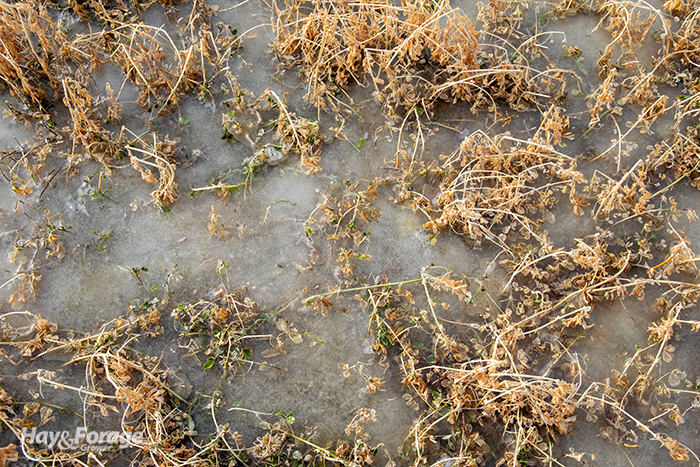
Ice sheeting. Ponded water from winter rains or melted snow that freezes over alfalfa can be deadly to plants. Ice sheeting can also occur underground when water percolates into the soil profile and freezes there. As alfalfa continues to respire during dormancy — although at a reduced rate — ice sheeting inhibits this gas exchange. The result is an anaerobic environment that supports the production of toxic compounds and suffocates plants.
An early break in dormancy. In many regions, above-average temperatures have defined winter conditions in recent years, and these warm-weather surges encourage alfalfa to break out of dormancy prematurely. When this happens, plants draw energy from their root reserves to try and facilitate new growth, depleting their carbohydrate stores that are supposed to last them until spring. If air temperatures retreat to normal winter lows — and without a few inches of stubble and/or snow to insulate the soil — alfalfa can suffer.